
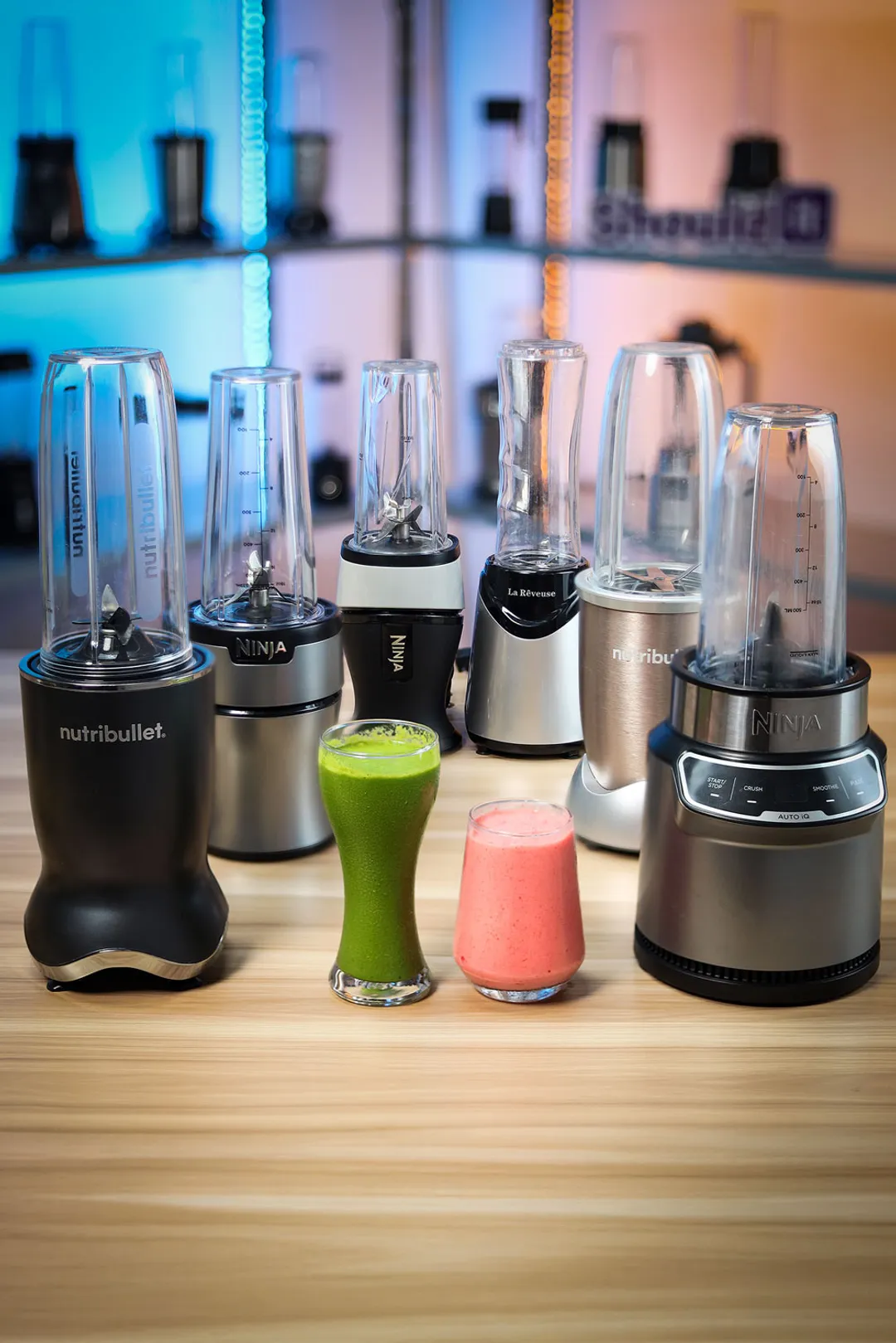
I know a lot of you probably think that personal blenders are just underpowered by nature. That's why when your machine leaves ice chunks behind, clumps up ingredients, or just stops spinning until you shake it, it feels like there's nothing you can do but accept it.
Small machine, small results, right?
Not exactly.
After using and testing 16 personal blenders, I found that the problem isn’t the category itself. It's the specific machine you're using. Some of the models I tested blended frozen fruits so smooth I could barely tell the difference from a full-size blender.
So to help you avoid wasting money on a machine that can’t keep up, here's my list of the 6 good personal blenders you can find in the market right now.
TL;DR: The Ninja Fit is the best bang for your buck—it breezes through ice, frozen fruit, smoothies, and protein shakes alike, all at a price that’s easy on the wallet. For a sleeker, sturdier build and three 20oz to-go cups, step up to the Ninja BN301. If you blend protein shakes every day and want the most power in a blender built to last, invest in the NutriBullet Pro 900w—it trades flash for function and is the best blender you can buy in its price bracket. On a tight budget? The La Reveuse whips up thick, creamy smoothies for around $30—just don’t expect it to crush straight ice. See the quick-comparison table below to get a sense for which model will fit your needs the best.
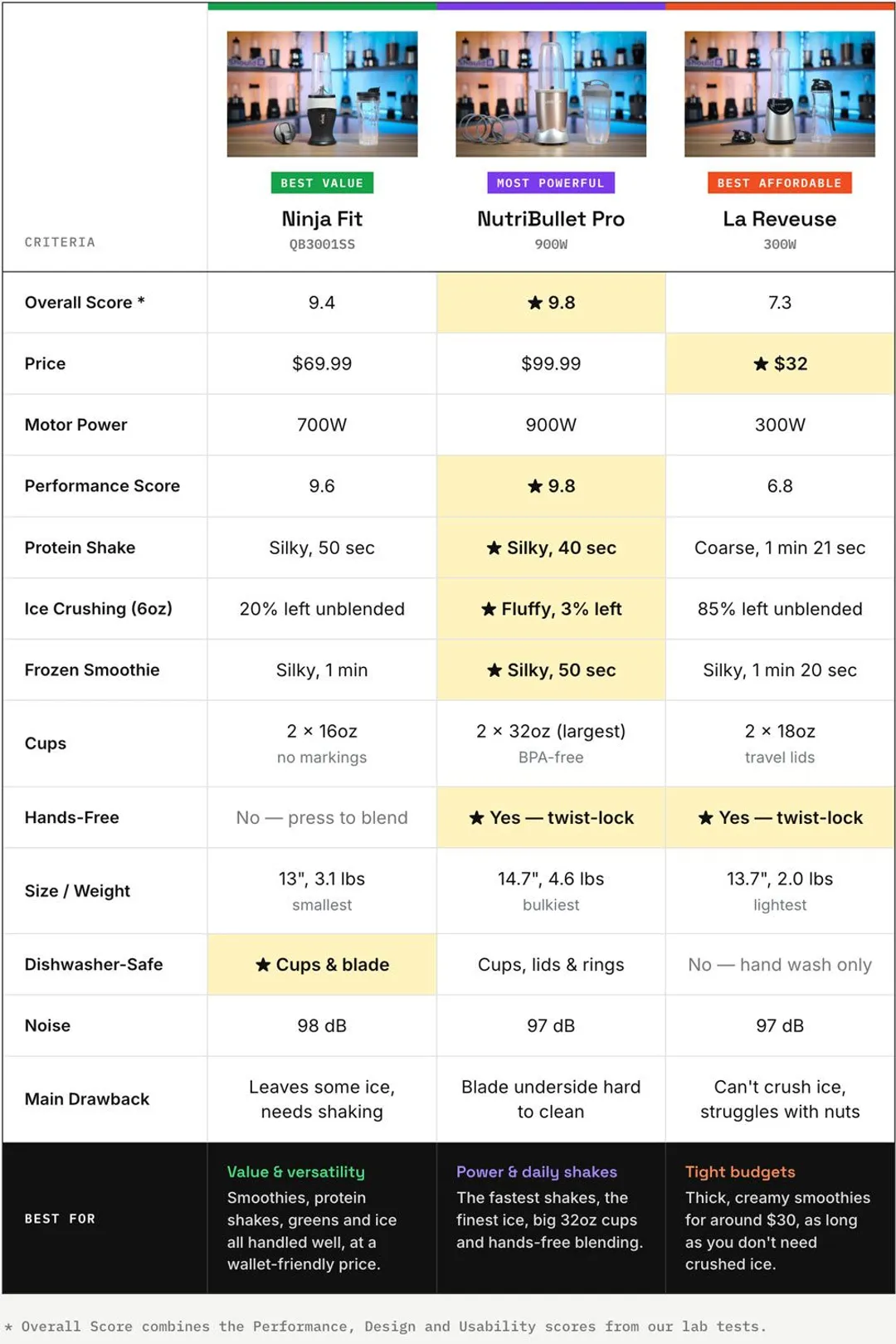
*All the prices in this article are at the point of publication.
**All test data are derived from our tests at ShouldIt.com.
Here's How I Tested Them
I bought 16 machines and ran each one through four different tests.
First up is a frozen smoothie. Frozen fruit goes in with milk, and I blend until it turns thick and creamy, like soft‑serve.
Next is the green juice test. It's my way of checking how well a blender breaks down tough fiber, with kale, spinach, and celery.
The third test was a protein shake, and the ingredients are hard enough that even full-size blenders can't take it lightly. So if you’re a dedicated gym‑goer who makes post‑workout shakes every day, this may be where you’ll care about most.
Finally, the ice test. On a hot summer day, this is exactly what you'll reach for, so it pays to have a blender that breaks ice down into a snowy texture.
1. Ninja Fit, BN301, BN401 – Best to Buy
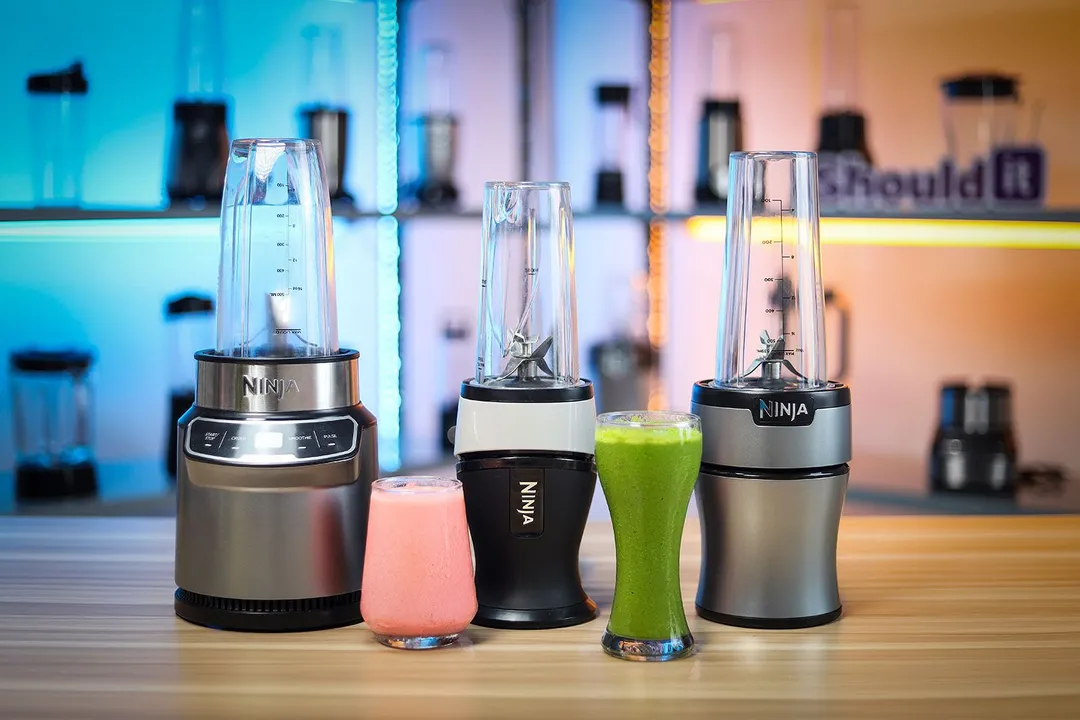
Four Ninja personal blenders went into my kitchen, the Fit, the BN301, the BN401, and the Nutri Auto-iQ, and honestly, all four blew me away. Say what you want, but Ninja has really set the bar the whole personal blender category is chasing, and that's not a low bar to clear. These are some of the best single-serve models you can buy right now, and I made sure none of them got an easy pass before earning that spot.
Still, the Auto-iQ has since been discontinued, so here, it's the remaining three that made the cut.
But how did they hold up once the testing started? In a word, beautifully. The Ninja Fit, BN301, and BN401 cleared every challenge I lined up for them.
Frozen fruit that normally gives you a chunky drink turned into a silky, café‑thick smoothie in roughly a minute. And that protein shake with dried berries, almonds, oats, and a big scoop of powder was so smooth it could easily be mistaken for one made in a full‑size machine.
But to be honest, nothing won me over quite like watching them take on ice. These three blitzed solid cubes into snowy powder in a matter of seconds, and that's no small feat, because most other blenders just spin in place while the ice rattles around, barely touched.
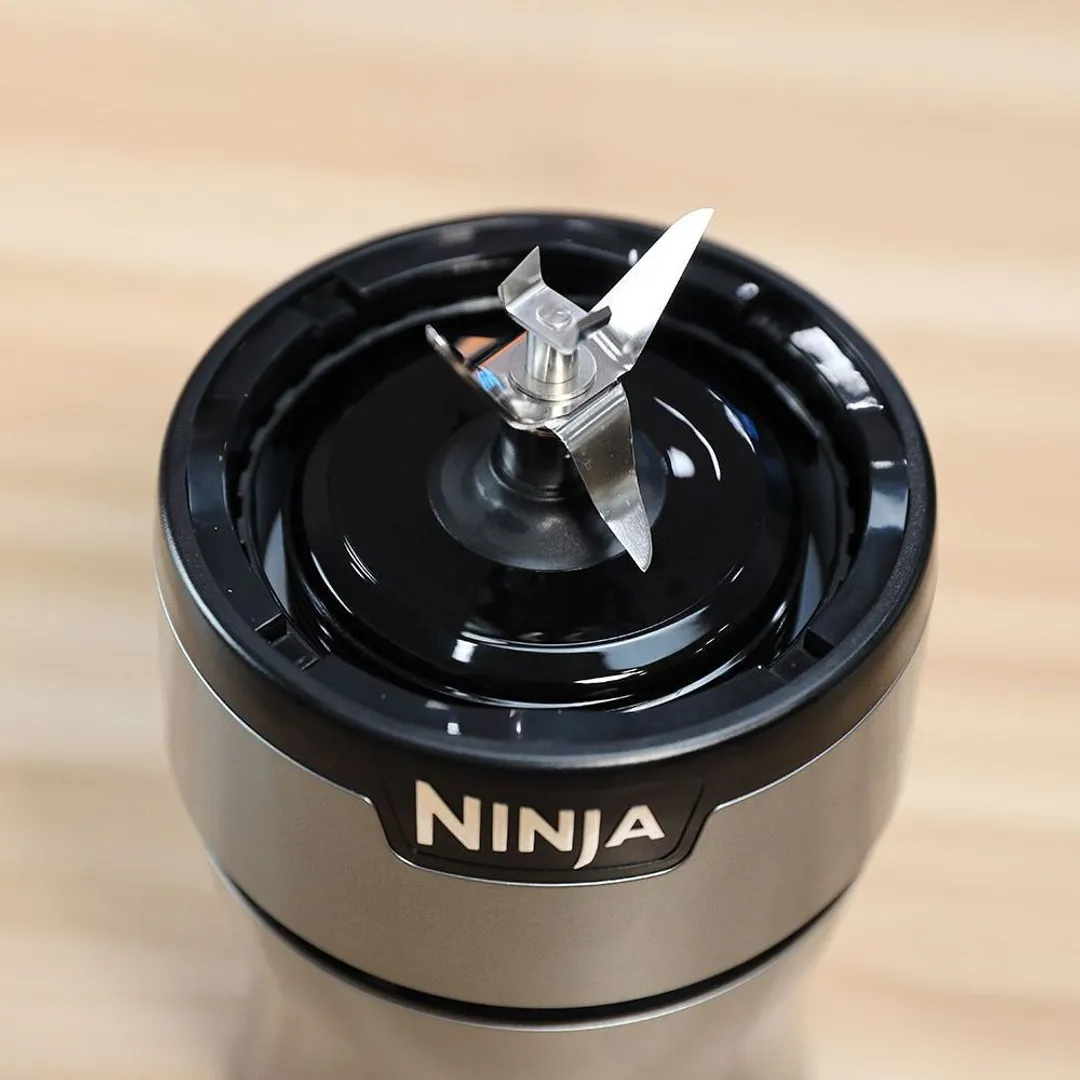
You'll be even more impressed once you find out what's behind that kind of power, and it all traces back to one thing: Ninja's own Pro Extractor Blade Assembly, a design you won't find on any other brand.
Instead of the usual tiny two- or four-prong cross, these ones stack six prongs at different heights. More edges, more cuts per spin, and that layered shape whips up a tight little tornado that keeps yanking everything you toss in right back down into the blades. For cleanup, it’s dishwasher‑friendly, and a fast soapy rinse usually does the trick.
In fact, this isn’t the only blade design Ninja uses. There’s a second special one called the Stacked Blade Assembly. You’ll see it only on Ninja’s full‑size models, and I’ve put three of those through their own set of tests: the BN701, the AMZ493BRN, and the BL610. That said, none of them blended as well as I expected. They crush ice amazingly, no complaints there, yet they can't create the same downward pull that keeps ingredients circulating through the blades.
So on performance alone, you could close your eyes, grab any of these three personal blenders, and still get top-tie results. However, if your kitchen setup and your own habits are a little different, there are a few things you’ll want to think about more carefully.
And the first tiebreaker is the price. Actually, the spread is just a handful of dollars, but once you handle them, the difference in build isn’t.
Three Ninjas, one clear pick for you
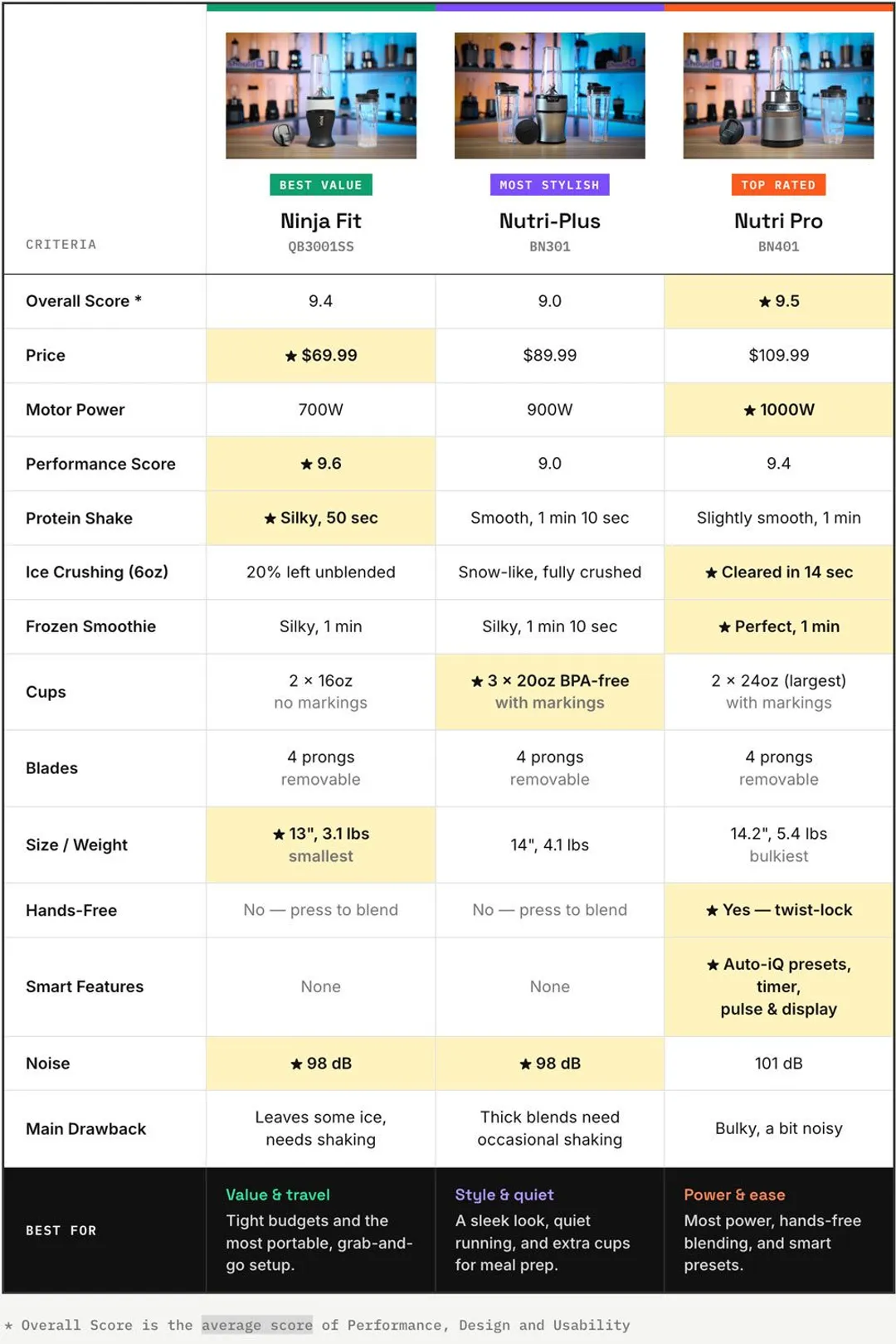
First, let’s focus on the Ninja Fit. At $69.99, it’s the cheapest of the three, and it’s the one I’d recommend to first‑time buyers.
On paper, "cheapest" usually reads as "the one you settle for," but as mentioned earlier, this blender doesn't blend like a budget pick at all. That said, you'll feel the price in your hand a little — the plastic gives away its budget roots when you hold it next to the BN301 and BN401.
But don't mistake that for flimsy. The overall structure is still reassuringly solid: the base stays planted through a full blend, with none of the wobble, rattle, or hollow buzzing that usually outs a cheaply built machine. So what you're really giving up here is a bit of surface polish, not actual sturdiness.
There are also two blending cups included, and they're the smallest of the trio at 16oz with no measurement marks. On the upside, that compact size plays to the Fit's strengths — the cups take up less room in a cabinet and slip into a bag or a car cup holder more easily.
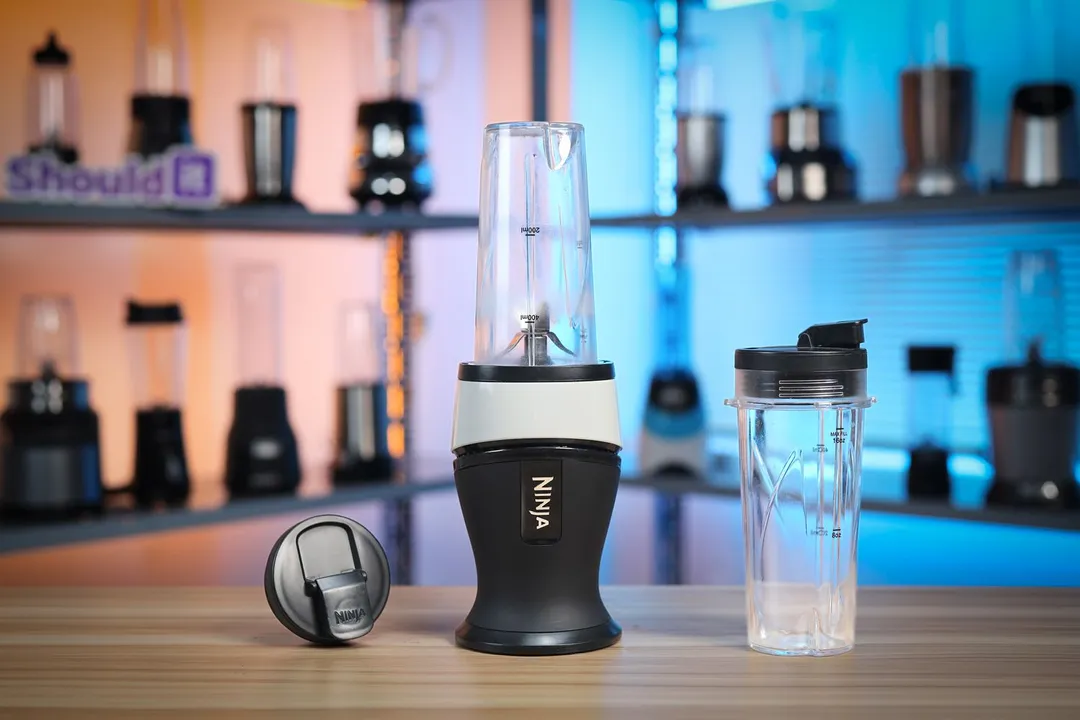
Ninja Fit Compact Personal Blender
So if raw blending power per dollar matters more to you than polish or aesthetics, the Ninja Fit is the one to grab.
Spend a little more (around $89.99), and the BN301 comes in with a sleeker look that puts the Fit’s basic styling to shame. Where the Fit keeps things plain and a bit utilitarian, the BN301 has soft curves and a slim, tapered body that I actually find quite charming. The gray‑and‑black combo looks clean and a little expensive too.
Looks‑wise, I honestly prefer the BN301. Side by side, it just feels like the more grown‑up machine. And because it doesn’t have that plasticky feel, it also comes across as a lot sturdier, and that’s backed up by how it’s held up for me. After almost two years on my counter, mine still hits just as hard as it did on day one, with no rattling even when it’s chewing through something thick. The cups are still clear, not cloudy, and the base doesn’t have a single obvious scuff.
In terms of size, it’s as compact as a 32‑ounce Gatorade bottle — that small, slim sports bottle you see everywhere at the gym. Like the Ninja Fit, it uses personal blending cups you can drink straight from. But here you get three 20‑ounce Tritan, BPA‑free cups in total, and I really like how they can fit into my day: spout lid when I’m out the door, storage lid when I’m just parking something in the fridge for later — and in both cases, they twist down tight and don’t get weird or leaky around liquids.
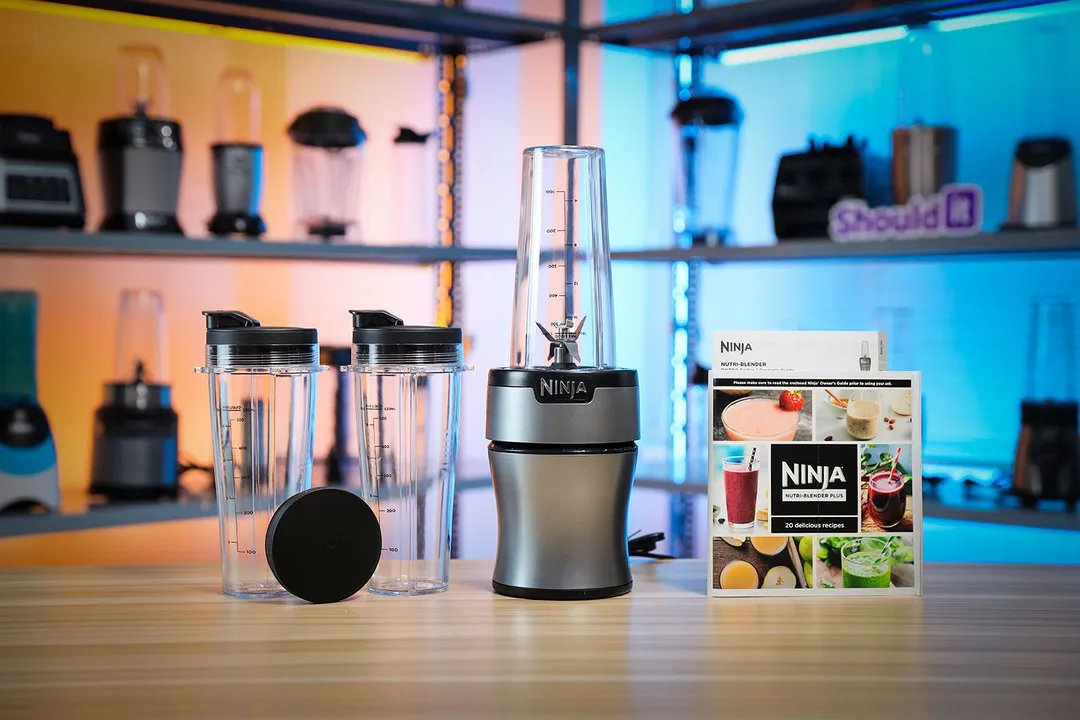
Ninja Nutri-Plus BN301 Personal Blender
So if you care even a little about how your setup looks, and you don’t want to blow the budget, the Ninja BN301 is worth considering.
But why not just pick the BN401? It’s sturdier, more modern, and smarter, right? It’s the size that gets in the way.
At $109.99, the BN401 is the most feature-loaded of the group, and it’s also the tallest, widest, and heaviest of the three. Big motor energy, as I like to put it, isn't always welcome in a small kitchen. It eats more counter space and it isn’t the blender you casually throw into a weekend bag.
Even so, I wouldn't treat any of that as a deal-breaker. It just means the BN401 is built for a different crowd. If a few extra dollars don't scare you off and space isn't an issue in your kitchen, this is a blender that'll stick with you for years. In all my time with it, there's been almost nothing to complain about along the way.
Apart from the 1000-watt motor, you also get the biggest cups, two 24oz ones, which makes it the natural call when you're blending for two or batching something larger.
Most importantly, it’s the only one of the three that really works hands‑free. You twist the cup into place, hit a button, and walk away while it does its thing. That’s a big deal for anyone who likes to multitask in the kitchen or just prefers to be as little involved as possible. Actually, the other two blend quickly enough that you aren't standing around for long anyway, but that extra bit of freedom on the BN401 is still hard not to appreciate.
Another bonus is that it actually has some brains: two Auto‑iQ presets (Crush and Smoothie) follow a programmed cycle and stop automatically when the blend should be spot‑on. It also offers a digital display, a pulse setting, and a built-in timer. You don’t get any of that on the other two machines, so the experience here feels well beyond “basic” — you've literally got a full-size blender squeezed into single-serve form.
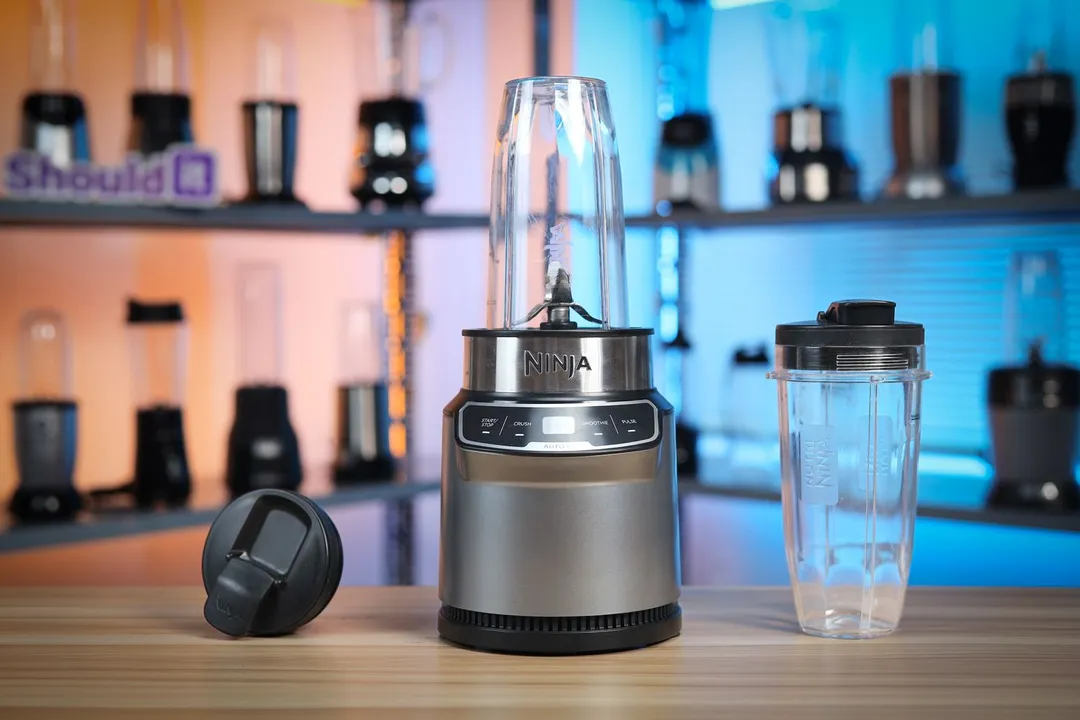
Ninja Nutri-Blender Pro with Auto-iQ BN401
So if what you're after is full-size blending power in a compact body, paired with cups you can grab and go, the Ninja BN401 is worth every penny.
2. NutriBullet Pro, Ultra – Most Powerful & Durable
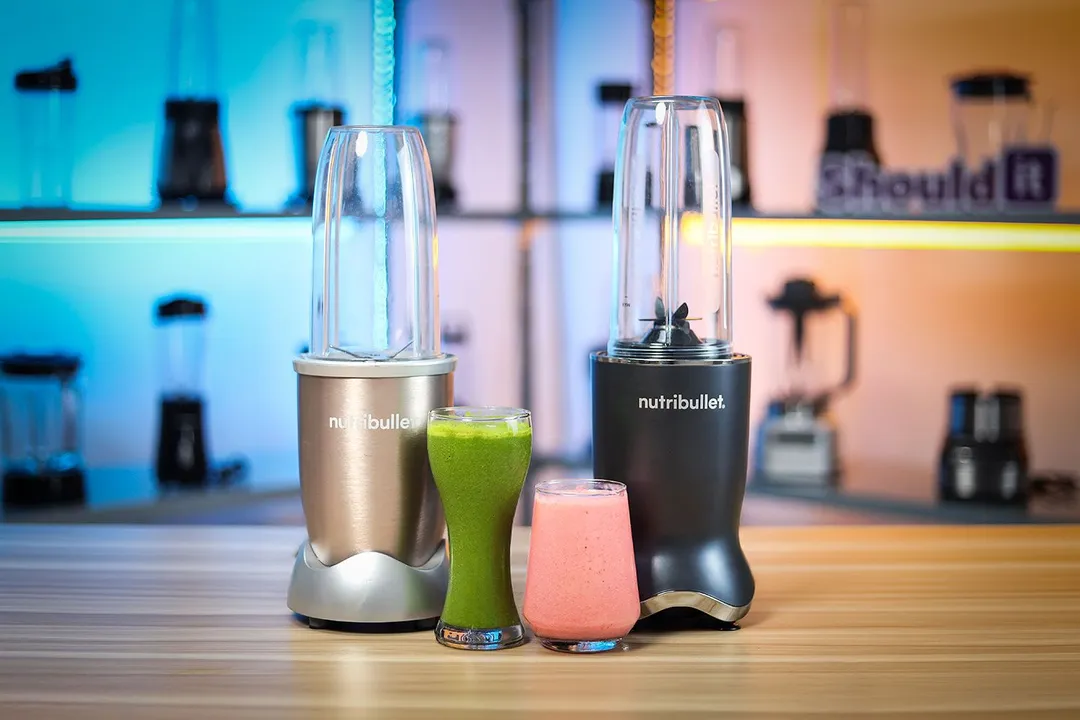
Great value or full-on premium. That's the straightforward choice between the NutriBullet Pro 900W and the Ultra NB50500, and after testing both back to back, I can tell you neither one is the compromise pick. If anything, each one happens to be the single best blender you can buy in its own price bracket. Not "pretty good for the price." The best.
Truth be told, NutriBullet's full-size blenders, such as the Combo ZNBF30500Z, were the very first ones I ever tested, and none of them has cracked, dulled, or let me down since. The Pro 900W and the Ultra NB50500 kept that streak going, with both machines showing up strong across the board.
Funny thing is, there's a 300‑watt gap between these two (900 on the Pro vs. 1200 on the Ultra), yet in use, they really don't feel that far apart. The one place you'll actually notice it is with ice and leafy greens, where the Pro pulls slightly ahead.
But that's pretty much the only area where the NutriBullet Ultra plays catch‑up, and even then, not against the market. Compared to something like a Magic Bullet, an Oster Pro, or a Black+Decker, it's still leagues ahead on both fronts. And everywhere else, especially in the tests that matter most (protein shakes and frozen smoothies), the Ultra shows up just as hard, gap on paper or not.
More importantly, during the process, you're not standing over either one. Both power through everything on their own, without all the shaking and stirring that weaker personal blenders so often ask for. Credit for that goes largely to the blade they have in common.
The Extractor Blade sits on a stainless‑steel platform with a titanium coating. Not only does this drive enough force to pull ingredients straight down into the blades, but it also creates a cutting surface that resists wear and tear better than typical setups.
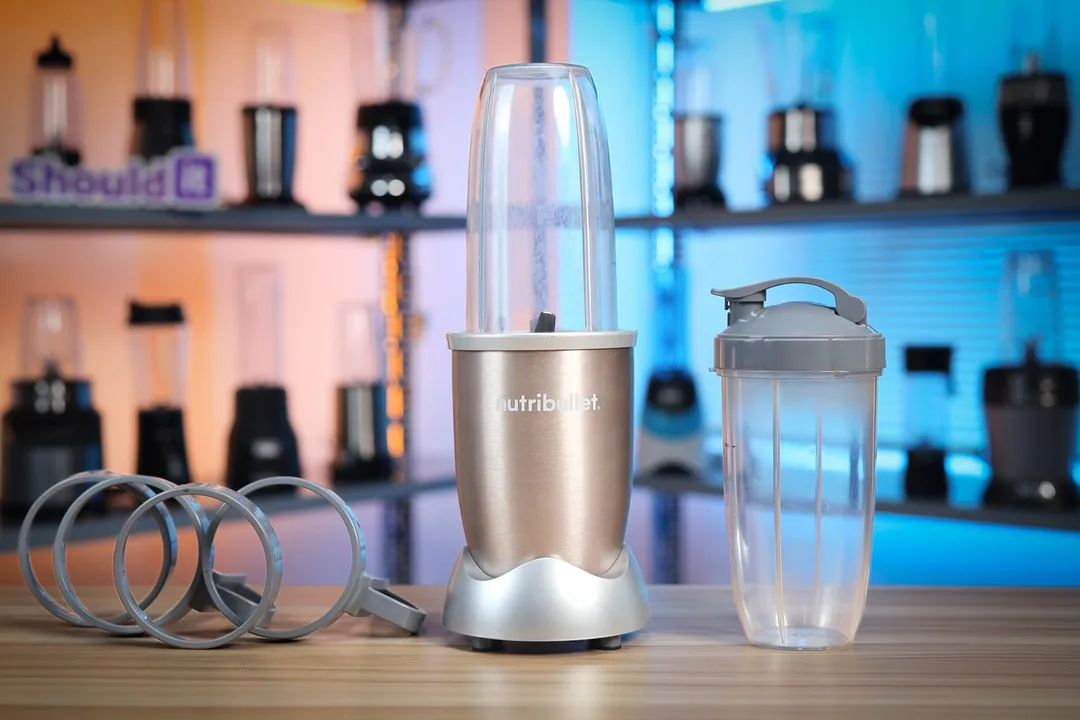
Nutribullet Pro Personal Blender
So if full-size power sounds great but your counter says otherwise, these two were basically made for you—and for NutriBullet lovers everywhere.
But with both of them performing this tight, what makes you pick one over the other? It really comes down to two things: the price, and who each one is for.
The Pro 900W is one of NutriBullet’s older models, so like the Ninja Fit, it sticks to a plain, no‑frills look. More recently, though, NutriBullet released an updated version: it still goes by NutriBullet Pro ($99.99), but now has a slimmer body that looks fresher on the counter while hanging on to all of the blending power.
Even so, set against the Ultra, it’s still the machine that trades flash for function. Out of all the latest-generation personal blenders available right now, the Ultra is the most premium-looking of them all. Priced at $109.99, it's modern, exceptionally robust, and belongs in a higher tier.
And when I call this blender “modern”, I’m not just talking about the way it looks. The blending experience itself is also steps ahead of most other blenders I’ve used, and a big part of that is down to the illuminated touch interface.
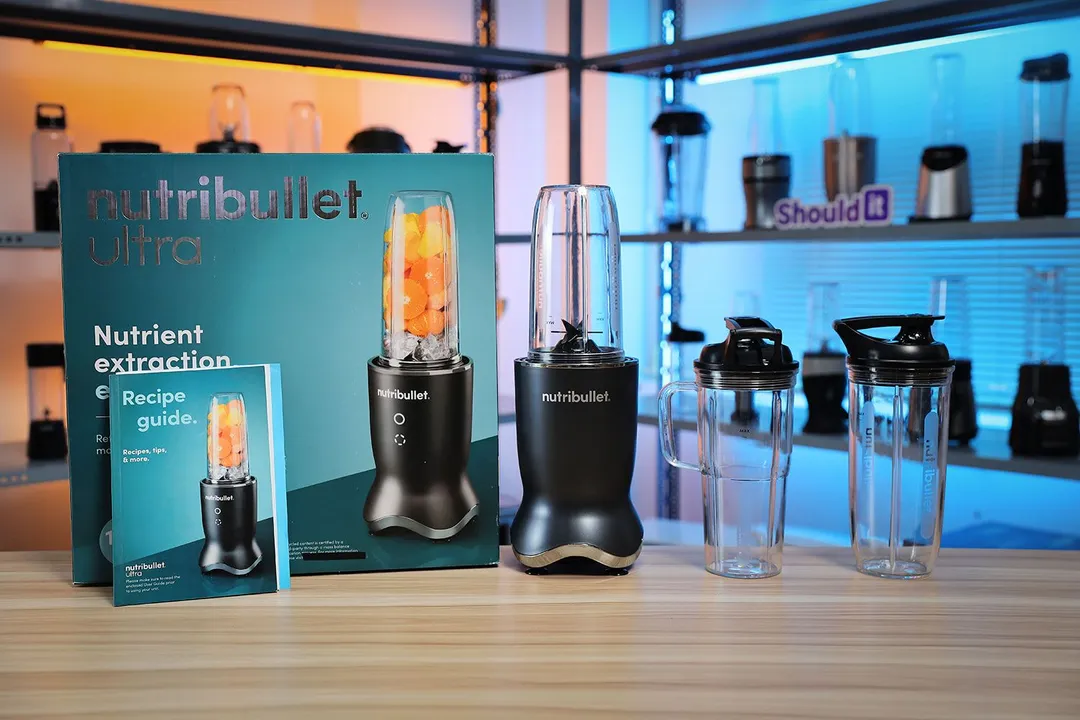
Nutribullet Ultra Personal Blender
Once the cup is locked in, the panel only lights up when everything is properly seated. From there, you get two blending options, and both are good ones. For most blends, a single tap of the solid circle starts the automatic hands-free cycle. When you need a bit more control, like chopping nuts, loosening stubborn food, or nudging thicker mixtures along, the dotted pulse button quickly puts you in direct control with short, powerful bursts — no cup-holding required. Both buttons are very responsive, yet I’d be careful while blending since just a light accidental touch can easily mess with the cycle.
The Ultra also stands out from the rest with an outstanding build quality. Unlike several nice‑looking appliances, it's plastic on the outside, but it doesn’t come across that way. Its hard shell and matte metallic finish have held up well in use, showing almost no fingerprints or light scratches in my time with it. At 15 inches tall, the blender is also portable enough to bring along if you ever need to travel with it. There are extra cups in the box, too. They’re made from Tritan Renew — a sturdy, BPA‑free plastic with 50% certified recycled content. They’re also sized so you can pour a full‑meal smoothie and still snap on a flip‑top lid to take it with you.
Bottom line: the Ultra is the no-brainer if you're chasing the full high-end experience. But keep it simple and the Pro still leaves you with zero regrets.
3. La Reveuse – Best Affordable
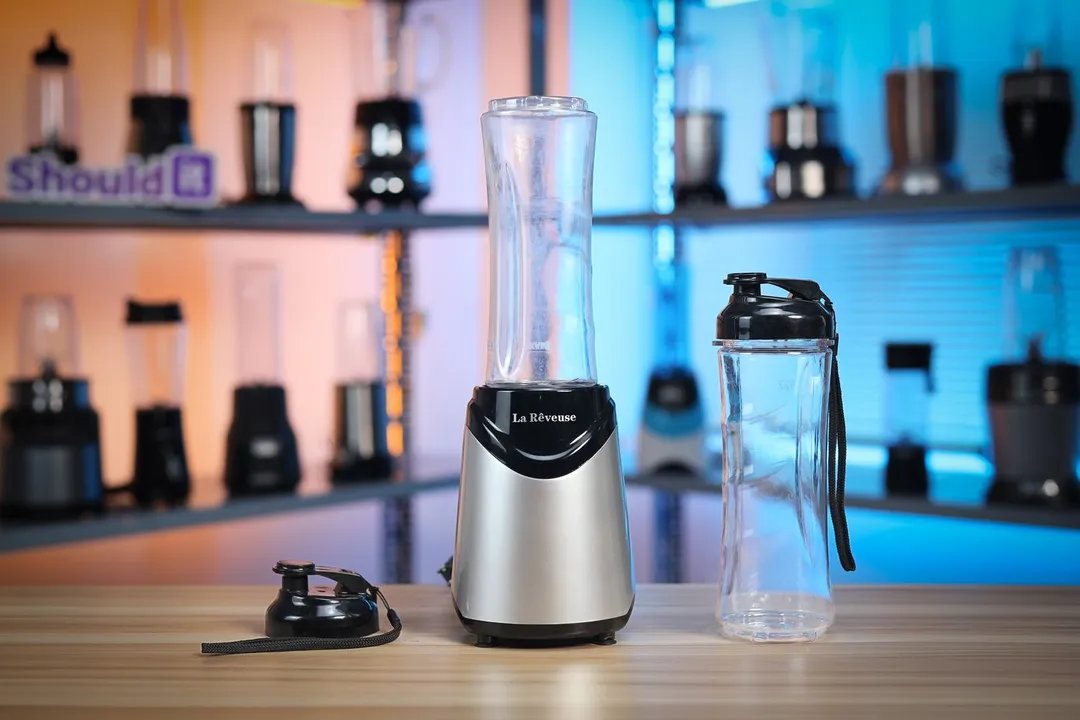
With the La Reveuse, you can spend very little and still end up with something that earns its place on the counter. At around $32, it's among the cheapest blenders in my kitchen, but its performance is anything but cheap.
In testing, the 300‑watt motor really shines with plant‑forward mixes: fresh produce, leafy greens, and lighter add‑ins all blend down to something I’d happily drink any day.
The frozen smoothie, in particular, was a highlight; it came out thick and creamy, with just enough chill to feel refreshing, and none of the watered‑down flavor I get from the old Magic Bullet. Thanks to the lock‑and‑blend setup, I barely had to babysit it at all, something I’m really grateful for, especially on rushed mornings.
The tradeoff is obvious when I throw in straight ice cubes, yet at roughly one‑third the cost, I find it hard to call that a dealbreaker. If your routine looks anything like mine — quick breakfast smoothies and easy blends — it more than pulls its weight.
As for build quality, the base is made from plastic with a brushed‑metal look, so the "entry-level vibe" is still there. The good news is that it doesn’t look flimsy. It doesn't flex or creak when dealing with thicker mixture, either. The two 18‑oz blending cups are also just regular plastic, and, unfortunately, after a bit of use, mine picked up some cloudiness and tiny scuffs. Even so, they still thread smoothly, seal well, and perform the same.
Just be aware that the cups and their lids aren’t dishwasher‑safe, which makes manual cleaning a little annoying. Because the cups are tall and narrow, I can’t really get my hand to the bottom with a normal sponge, so it helps to have a simple bottle brush nearby to finish the job properly.
Otherwise, there’s nothing fussing about using it. The La Reveuse is quick to assemble, simple to pull apart, and doesn’t demand any kind of learning curve. For anyone chasing both value and versatility, this blender is absolutely worth a look.
La Reveuse – Best Affordable
Price: $32
Overall Verdict
At the end of the day, all three categories here earn their spot. The Ninja Fit, BN301, and BN401 prove that a small blender can hit just as hard as a full-size one, and the only huge decision left is how much size and smart you want to pay for. The NutriBullet Pro and Ultra split the difference between value and premium, and either one will leave you satisfied depending on your budget. On a budget but still want a capable blender? Put the La Reveuse at the top of your list. It's the model that shows you there’s still plenty of value left on the table.
Just think about your kitchen space, your budget, and whether ice is a regular thing for you, and you’ll end up with the right pick.
For a wider view of the market, you can head over to Shouldit’s list of the best personal blenders. All of them have been lab‑tested by us, so the recommendations are grounded in actual data.

Luna Regina
Writer, Author- Debra GarciaBeen thinking about getting a personal blender, so this came at a good time. leaning toward the BN301 now due to size and price