
There's a moment every home cook eventually has: you open the freezer, pull out what was supposed to be a perfectly good piece of chicken, and find it buried under a gray layer of freezer burn.
It's a tragedy, however small, and an avoidable one.
Even though a good vacuum sealer isn't exactly a must-have in a kitchen, getting one is absolutely worth it in my opinion. Stuffs last far longer after they've been vacuum sealed, and if you do meal-prepping like I do, life's just a whole lot easier when you can arrange meals by bags (that also keep them nice and fresh through the week while they're at it).
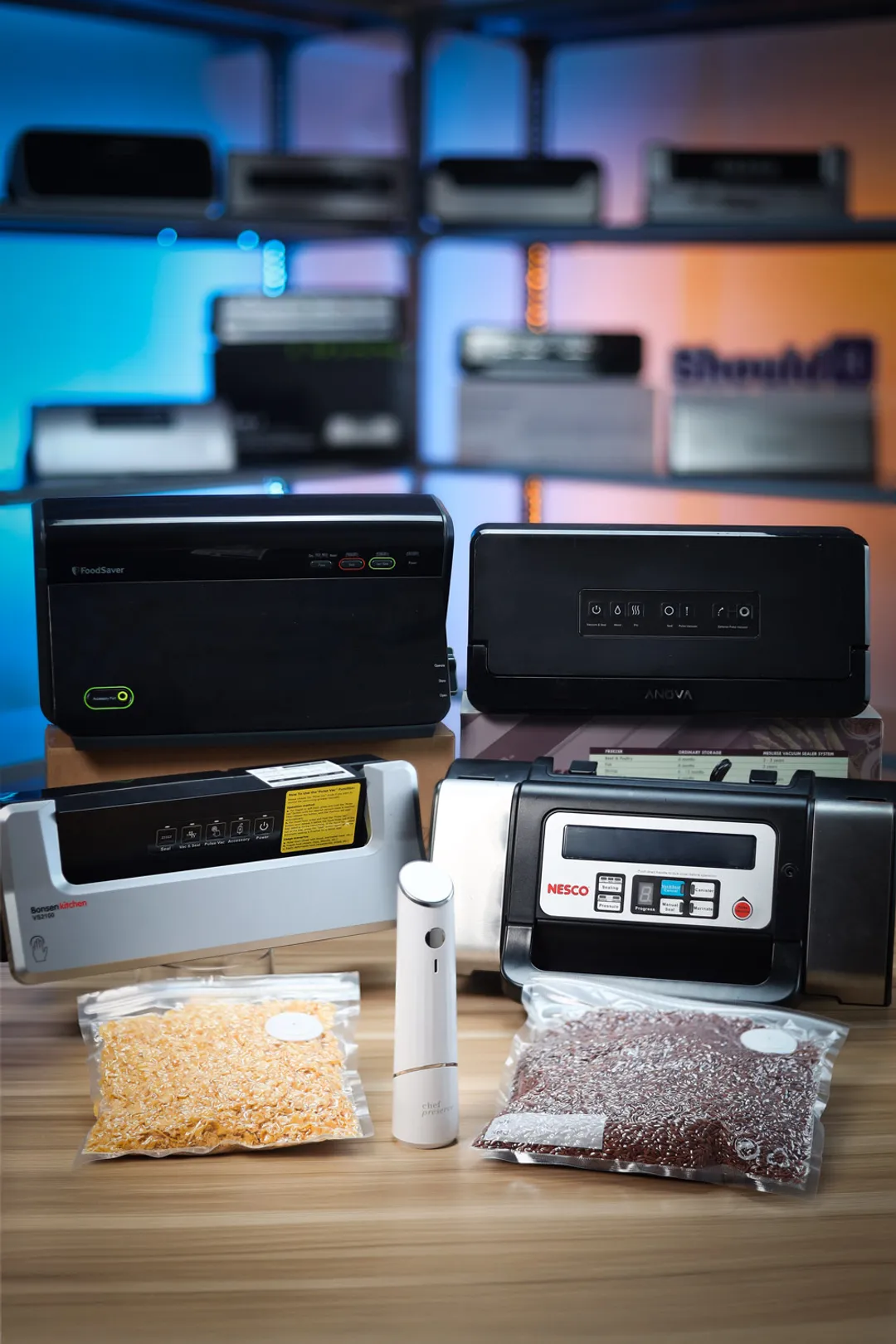
Really, the only catch is that it can be overwhelming picking a vacuum sealer for the first time: the market is crowded, and not every machine earns its counter space. That's how I found myself buying – now reviewing – top 18 most popular vacuum sealers to see which one turned up as the best. After a few weeks, here are my picks for the top five.
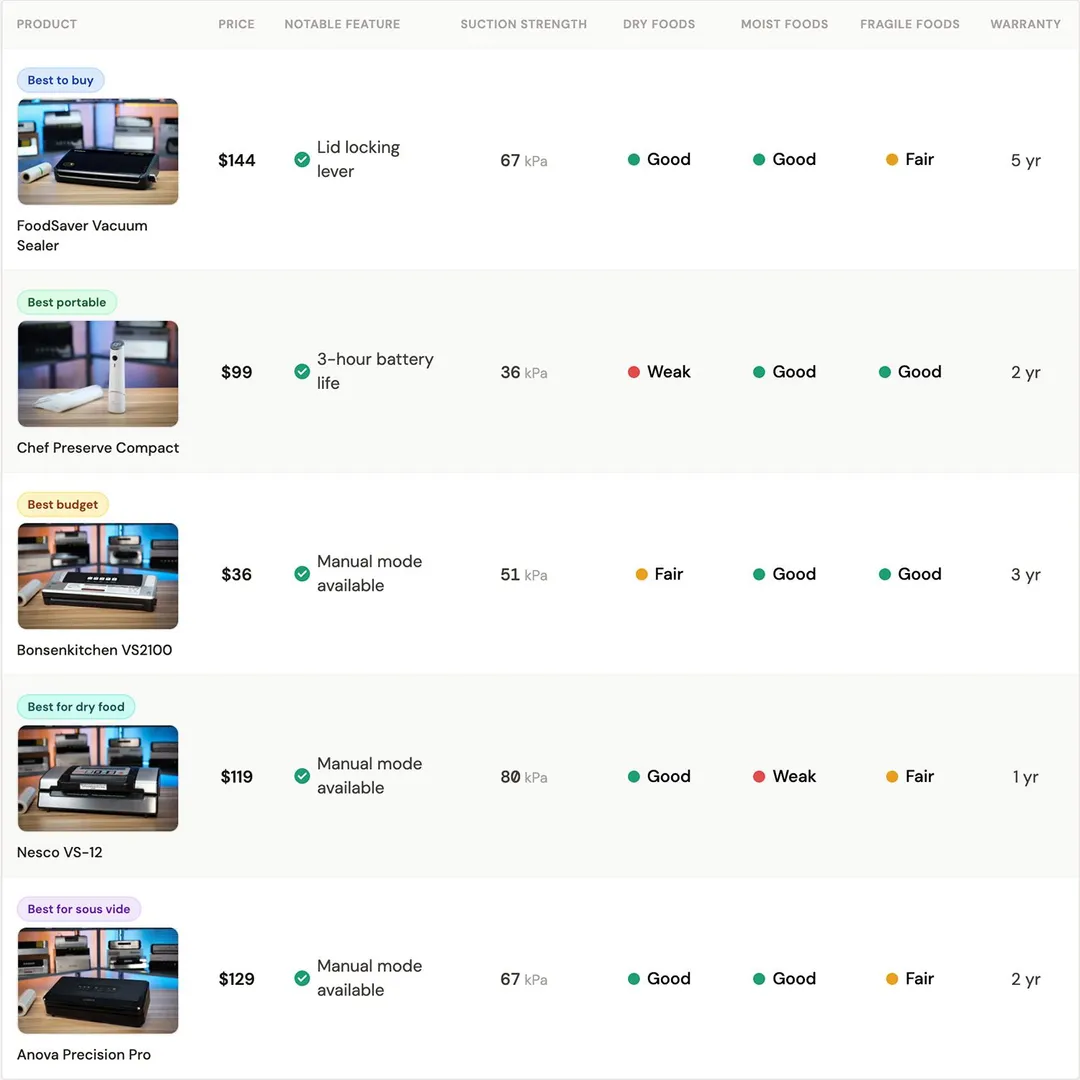
TL;DR: The best all-around pick right now is the FoodSaver FM-2100 ($144), the best value for the money is the BonsenKitchen VS-2100 ($36), and the best portable option is the Chef Preserve ($99). Here's a quick side-by-side comparison of the sealers we recommend in this roundup.
*All the prices in this article are at the point of publication.
**All test data are derived from our tests at ShouldIt.com.
Here's How I Tested Them
I bought 18 machines in total, each went through three tests to figure out its performance.
First, a suction strength test – I (with the help of my trusty vacuum gauge) measured the vacuum pressure (in kPa) each machine pulled and how long it took.
Second, a crunchy food breakage test: I sealed 4.5g of snacks in each machine and weighed how much got crushed in the process. The lower the loss, the gentler and better-calibrated the vacuum.
Finally, a sous vide seal test, where I vacuum-sealed marinated beef at each machine's moist mode or default setting to see whether the seal held up under wet conditions.
Now, without further ado, let’s get into our list!
1. FoodSaver FM-2100 – Best to Buy ($144)
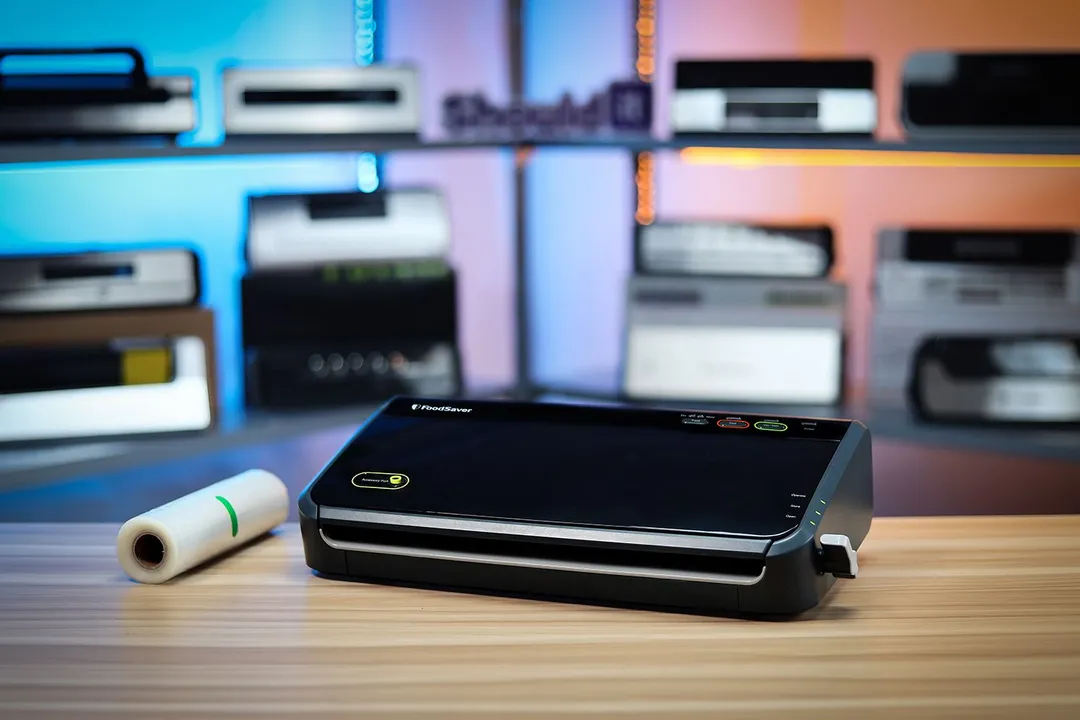
I tested the FoodSaver FM-2100 after grinding through about a dozen other models, so I wasn't expecting much. Wrong call on my part. This machine delivered across the board – faster seals, cleaner performance, and outperforming machines far more expensive.
I got the FM-2100 for around $144 – easily putting it in the "high-end" camp. The design of the sealer reflects that price well and is what I appreciate most about this sealer – someone at FoodSaver actually thought about what's annoying in day-to-day use.
For instance, instead of having to press on the lid to begin sealing, they built a nifty lever to the side of the unit that can be switched between three positions: Open, Store, or Operate. Open is self-explanatory. "Store" mode half-engages the locks, letting you keep the lid in place without stressing the rubber seals. "Operate" clamps it fully down for sealing. It's one of those design details that sounds small until you're actually using the thing every day.
The dual heat sealing strips mean every bag closes with a proper, airtight seal that holds up whether you're stashing things in the fridge or deep-freezing them for months. The built-in roll cutter lets you make custom bag sizes on the spot without digging around for scissors, and the accessory port with hose opens up the machine to containers and canisters, not just bags. Cleanup is painless too – the drip tray lifts right out and goes straight in the dishwasher.
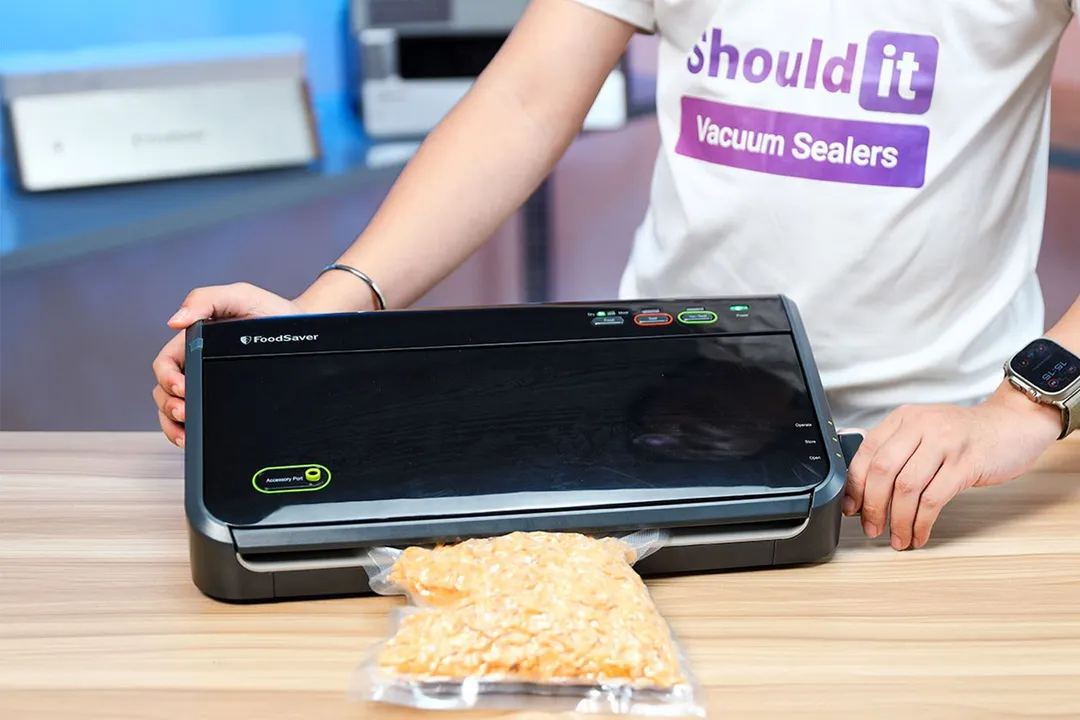
In my suction test, it hit 67 kPa – second only to the most powerful sealer I’ve tested so far, the Nesco VS-12, which hit 80 kPa – making it excellent for storing dry foods. The sous vide seal test was a clean pass at the default setting – marinated beef sealed without issue. And in the snack breakage test, its performance was fair.
Where I'd push back a little at this price is the noise. It's a bit too loud for my liking, especially when it's really struggling – I kid you not, it sounded like a construction site just moved into my kitchen.
The warranty, though, is genuinely exceptional for this category: the FoodSaver FM-2100 is backed by a 5-year limited warranty – one of the longest you'll find on any vacuum sealer at this price point, and a meaningful sign that FoodSaver stands behind the build. It's a well-built sealer that performs really well, and I highly recommend it for most average cooks stocking a freezer with bulk buys and weekly meal preps.
FoodSaver FM-2100 – Best to Buy
Price: $144
2. Chef Preserve – Best Portable ($99)
Of the three portables I tested, the Chef Preserve came out on top – and it wasn’t even close. It’s a handheld, cordless unit roughly the size of a pepper grinder, and having only ever used a handheld sealer before (all the ones I had or have been using are countertop-sized). I’ll be honest: my expectations going in were low. An appliance this small sealing food properly? Sure…
… imagine my surprise when it turns out that not only does it work, but it works really well.
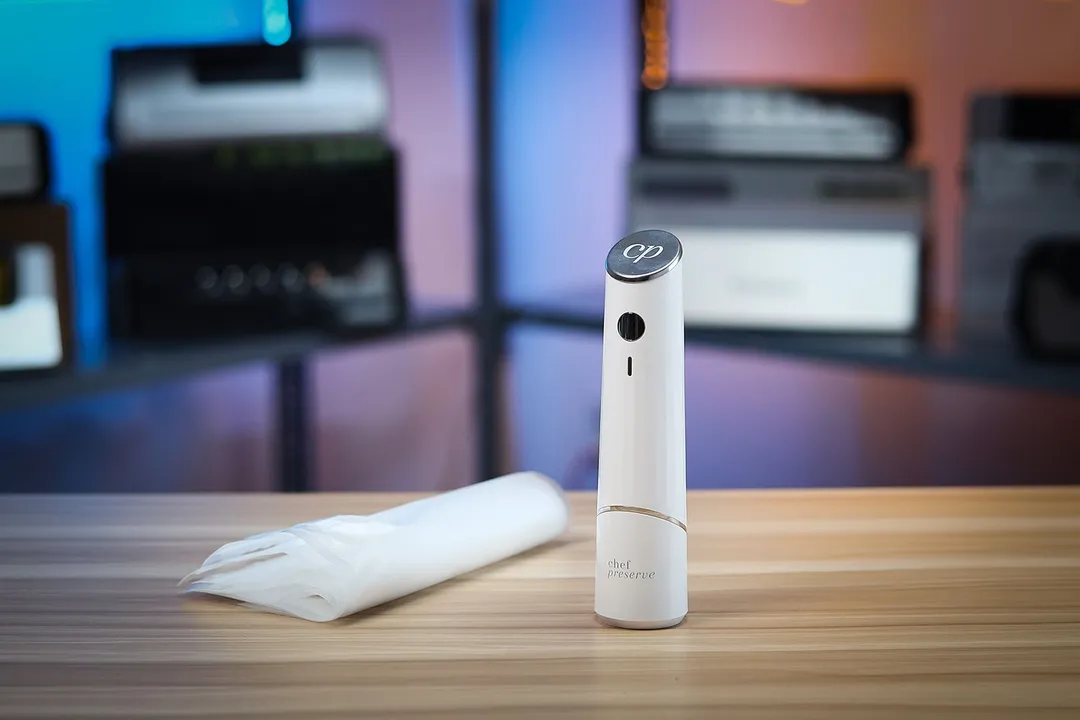
The basics: 1,200 mAh rechargeable battery, seals a bag in about five secs, and charges fully via USB-C in around two hours. The whole sealer fits in a kitchen drawer and produces (I measured this) around 60 dB of noise – quieter than most other countertops in this roundup. Chef Preserve markets it as lasting 1,000 bags per charge, and in my stress test – at about 3 hours of continuous use per charge – that figure actually seems to hold up well. That’s a lot of sealing for daily home use, and with a two-hour recharge time, running it flat is barely an inconvenience.
Performance was the real surprise. Solid foods came out tightly packed with barely any air left inside, and softer items held their shape without getting crushed – something cheaper portable sealers tend to struggle with. Suction is rated at ~36 kPA, which is meaningfully stronger than what the BonsenKitchen measured in my gauge. For fridge storage and short-term preservation, it’ll hold its own.
The other two portables I tested, the FEPPO and FoodSaver Mini Handheld, performed about the same as the Chef Preserve. Where things fell apart (for them) was the battery. The FEPPO lasted 1 hour and 21 minutes, while the FoodSaver called it quit 37 minutes in. If you seal a lot of bags regularly, both will have you reach the charger way too often for me to take them seriously. The Chef Preserve is the only one you don’t have to stress about.
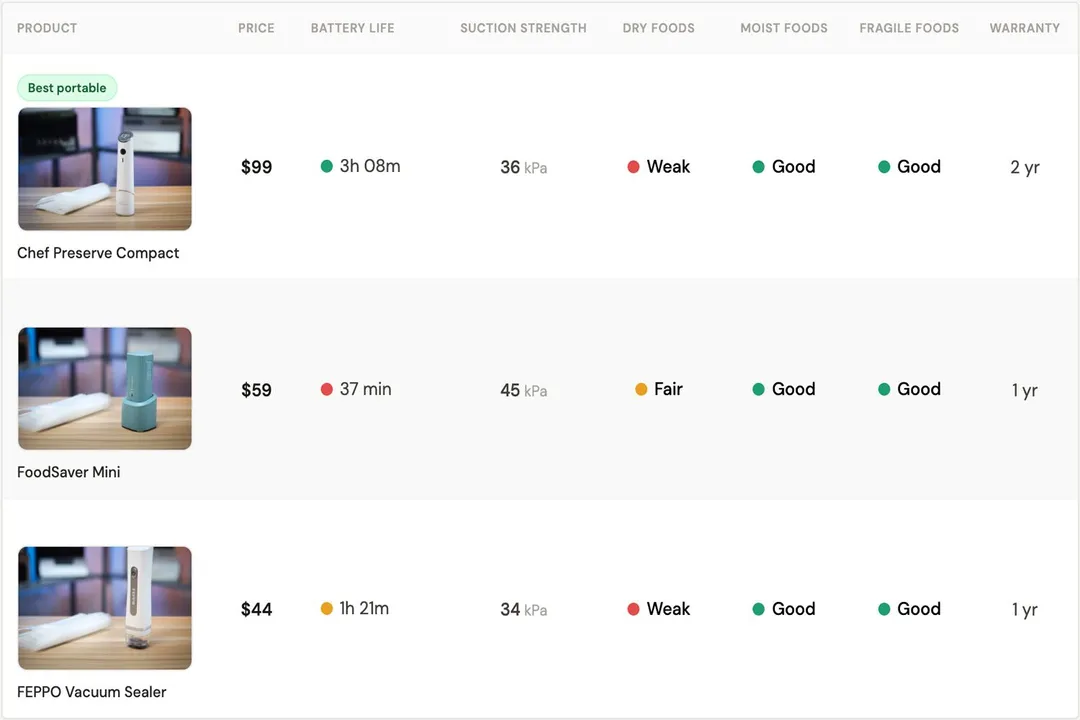
But with that said, it’s not without its faults. The bags are proprietary, so you’re reliant on Chef Preserve for replacements. But the good news is that they’re reusable, which cuts down on waste and running costs compared to single-use rolls. A 30-count pack of small (8x10) bags is currently $31.99 on Amazon. Freezer seal integrity is decent, but not on par with a dedicated countertop machine. It should work fine for a few weeks, but less reliable for anything you’re storing through winter. The unit is backed by a two-year warranty – quite assuring for something this compact.
For what it’s designed to do, though – daily leftovers, meal prep, keeping things fresh in the fridge, travel – it’s the best option in this category by a clear margin
Chef Preserve – Best Portable
Price: $99
3. BonsenKitchen VS-2100 2025 – Best Budget ($36)
I bought and used a BonsenKitchen VS-2100 all the way back in around 2023. It was cheap and did a decent job for the price – it wasn't eye candy or anything (it was, after all, a ~$30 vacuum sealer), but I was quite happy with it. So when I found out they've updated the VS-2100 for 2025, I gave it a try immediately. The price is still competitive at $36 – you may even find it for less on sale. It's a more capable machine than that price tag really has any right to suggest, however.
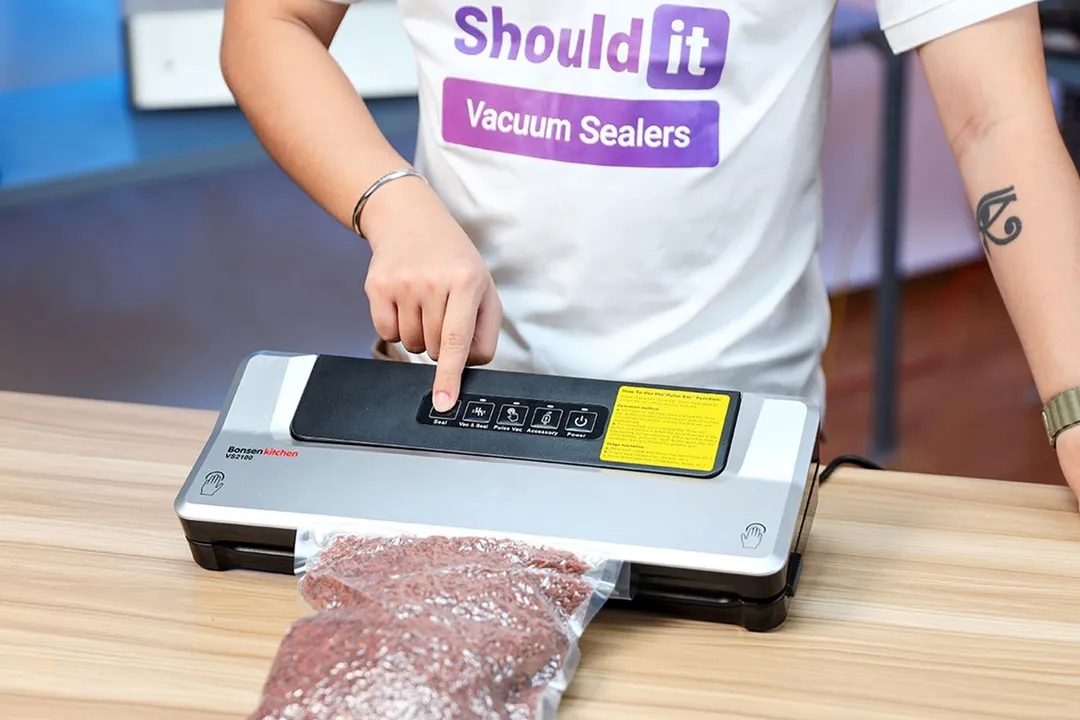
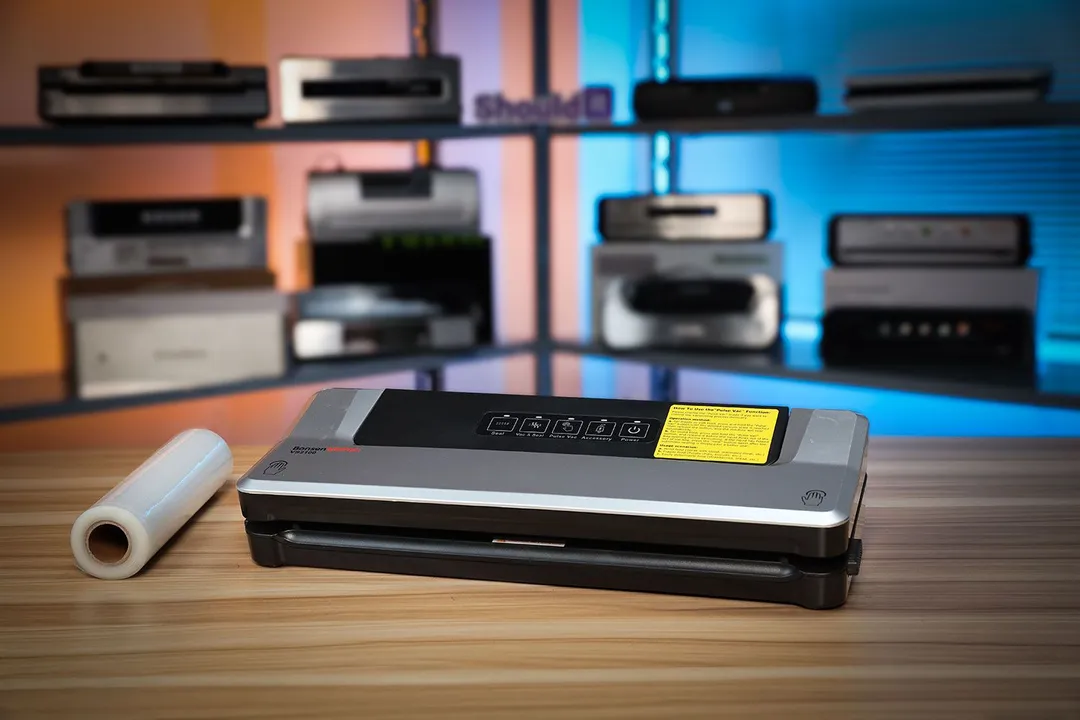
It's light – 2.6 pounds – and at just over 15 inches long, it fits in most kitchen drawers without taking over. Yes, the build is plastic, but it doesn't feel cheap in the hand. BonsenKitchen also backs it with a three-year warranty, which is a pretty confident move for a budget appliance and something I'd factor into the value calculation.
When I hooked a vacuum gauge to it, the sealer measured around 51 kPa – nearly double the 35 kPa max suction of the original 2023 version (which I also tested).
It’s one of the quieter machines in this roundup – my meter put it at around 76 dB. You get both a dry mode and a standard seal mode, plus an accessory hose port for containers. You don't get any of the bells and whistles of pricier models like a bag cutter or roll storage, but for the price, that's to be expected.
On moist foods you'll sometimes want to run a second cycle, and the sous vide test confirmed the ceiling: it needed to be pushed to its highest vacuum setting to get a clean seal on marinated beef.
Here's the thing, though – most people aren't sealing soups and brines on the regular. For the everyday vacuum sealing tasks that fill up most people's weeks (cereal, sliced meats, grains, and such), the BonsenKitchen handles it well enough that you'd never feel like you bought the wrong thing. If you're new to this and want to test the waters before spending more, this is a smart and honest starting point.
BonsenKitchen VS-2100 2025 – Best Budget
Price: $36
4. Nesco VS-12 – Best for Dry Food ($119)
The Nesco VS-12 is where you really start to get into "commercial kitchen-level" sealer territory. It's big and bulky, the top control panel is filled with buttons and flashing lights. If this is your first vacuum sealer, it'll definitely feel a bit intimidating. But once you've gotten used to it, this $119 sealer can genuinely be your one-and-only for a long time.
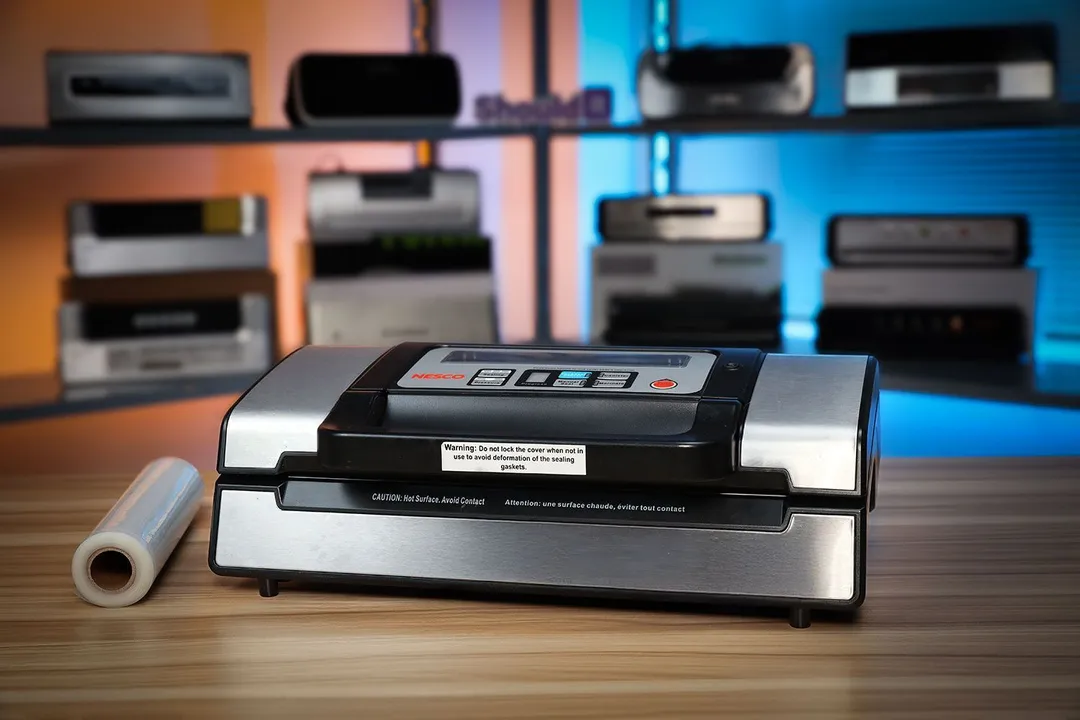
The double vacuum pump system pulls 80 kPa of suction – the strongest of all the 18 sealers I’ve tested to date. It’s strong enough to get a near-perfect vacuum on everything from thick cuts of meat to delicate produce. In return, though, it’s also the loudest model in this group, logging around 83 dB – not a dealbreaker, but worth knowing if you're sealing early in the morning with people asleep.
Three seal settings (dry, moist, and double) plus two vacuum pressure levels (normal and gentle) give you actual control over the process. In our snack breakage test, it crushed 1.94g out of 4.5g – about 43% – on the normal setting. Switch to gentle, and that drops to 1.31g (29%).
The one area it fell short was the sous vide test: I had to run it three times before I got a good, watertight seal suitable for sous vide, the same limitation I saw on the BonsenKitchen.
One thing I didn't expect to like as much as I did: the lid locking handle. Instead of pressing down on the lid like so many sealers, you only need to push down the handle on this one (a feature also available on the Anova Precision). It’s much comfier and ensures a tighter seal, in my experience.
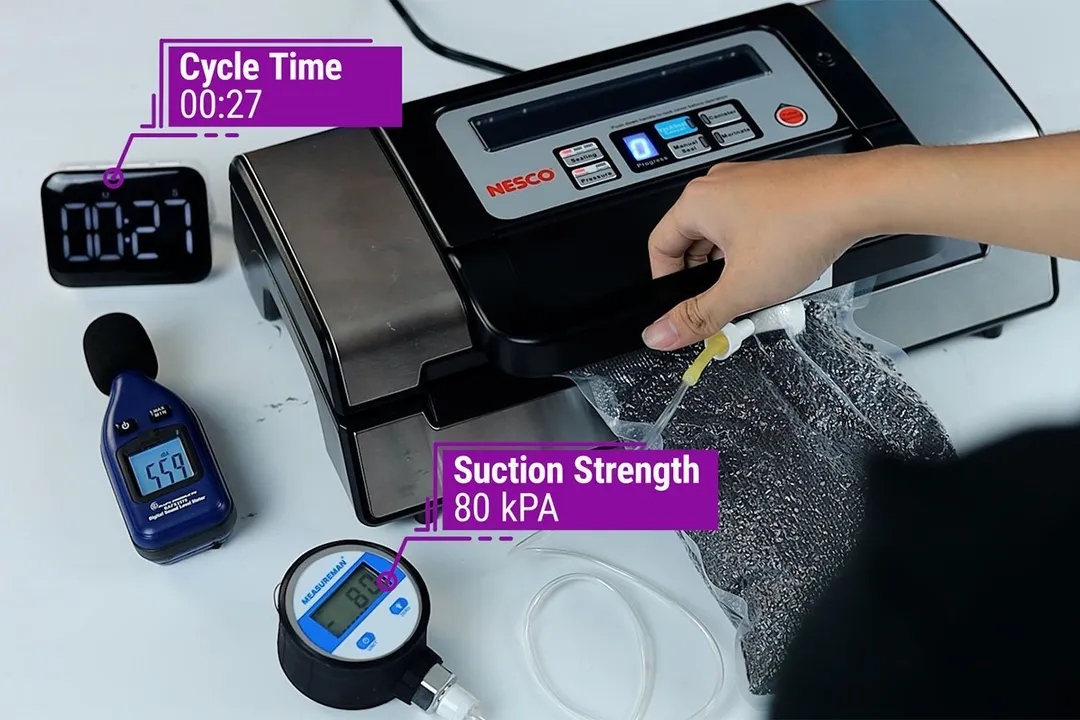
There’s also the countdown timer. Most sealers just run and you wait, with no idea how long is left. The VS-12 shows you the remaining time, which makes batch sealing feel way less tedious. The handle-locking mechanism is also more intuitive than what you typically get on FoodSaver machines at this price – you just bring the lid down and push on the bar in front to lock, no fidgeting around with latches.
Dry foods are where this machine really makes its case. Coffee, grains, nuts, snacks – the double pump extracts air so thoroughly that properly sealed dry goods stay fresh for a strikingly long time. The tradeoffs are size and cleanup: it's a big machine, and the non-removable drip tray means wiping it down with a damp cloth rather than popping it in the dishwasher. The warranty is a standard one year from date of purchase – fine, though it doesn't stand out the way FoodSaver's does. For a serious home cook who's regularly processing food in bulk, those tradeoffs are easy to live with. For someone who seals things every couple of weeks, it might be more machine than the situation calls for.
Nesco VS-12 – Best for Dry Food
Price: $119
5. Anova Precision Pro – Best for Sous Vide ($129)
If you're already an Anova sous vide person, buying the Precision Vacuum Sealer Pro will feel like the obvious next step. But even if you've never touched a sous vide setup, this is a well-built machine at $129 that makes a strong case for itself.
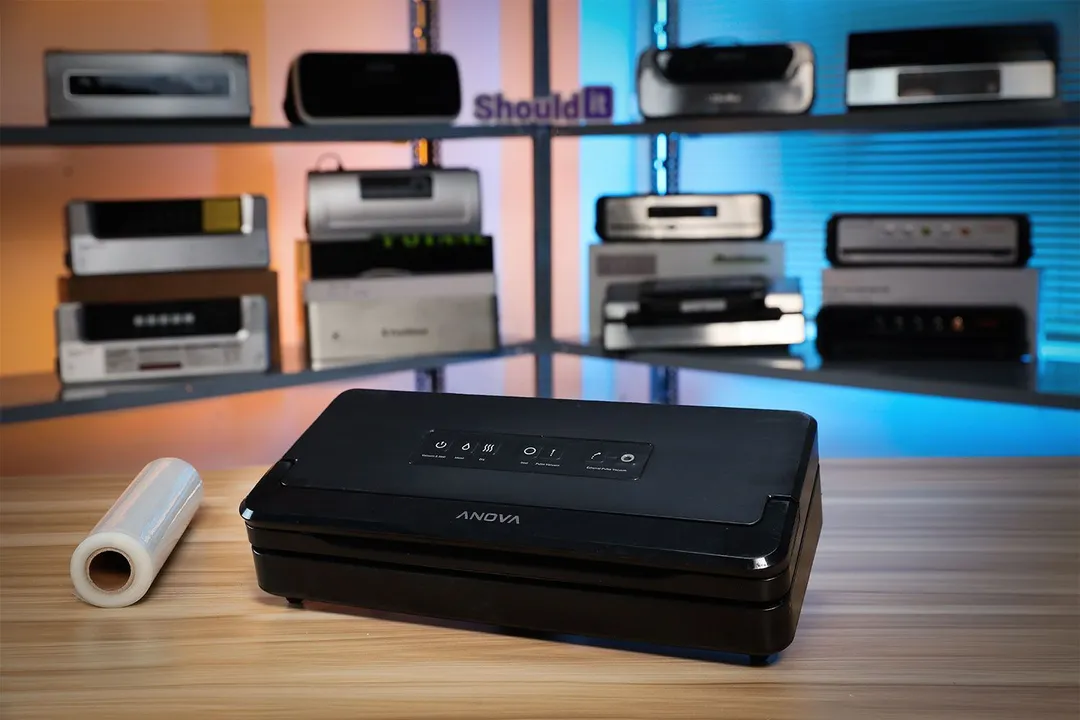
Like most Anova products, this sealer looks great – all matte black with glossy plastic trims and details. If you care as much about the aesthetic of your kitchen as its function, it'll do nicely.
Performance-wise, my vacuum gauge puts it at around 67 kPa. It passed the sous vide seal test cleanly at the default setting every time – not once did it fail at either vacuuming or sealing in the weeks that I tested it. This outstanding wet food vacuuming performance, making it a particularly attractive choice if you often do sous vide or have a habit of vacuuming moist, juice-rich food. Dry food vacuuming performance is decent, though not perfect – an OK trade-off, I’d say.
Noise-wise, it logged around 83 dB, on par with the Nesco. One small note from testing: the lid needs to be pressed at the center to engage the lock evenly – press off-center and the seal isn't as consistent. Minor, but worth knowing upfront.
Anova rates it at 100+ consecutive seals without a rest cycle. Most home cooks will never approach that number, but it's a signal about how the motor is spec'd and how long the machine is designed to last. The double seal, built-in bag roll compartment, integrated cutter, and cord storage hidden in the base all add up to a design that feels genuinely considered rather than thrown together.
It's covered by a two-year limited warranty – not FoodSaver's five-year, but solid for a machine at this level. For anyone cooking sous vide regularly, storing moist proteins, or just wanting the best overall performer in this group, the Anova is the right choice.
Anova Precision Pro – Best for Sous Vide
Price: $129
How Do They Stack Up? A Side-by-Side Comparison
If you're trying to decide between them, here's everything at a glance.
Overall Verdict
So where does all of this leave us?
For most households, the FoodSaver FM-2100 is the one to get. It's fast, reliable, handles everyday vacuum sealing without fuss, and the five-year warranty is a genuinely rare perk that adds real long-term value.
Tight on space or need something portable? The Chef Preserve is the best option in that lane – with 3 hours of battery life, you can seal up to 300 to 400 different bags in one charge.
For those on a tighter budget and just getting started, the BonsenKitchen 2025 is a surprisingly capable entry point (and comes with a 3-year warranty for the price, which is a nice bonus) that won't make you feel like you settled.
The Nesco VS-12 is for the cook who's serious about it – bulk processing, powerful suction, and the best build quality in this group – especially if dry goods storage is a priority. If you often do sous vide or regularly work with wet, messy proteins, then the Anova Precision Pro is a must-buy.
Whichever one you end up with, a vacuum sealer is one of those tools where you feel the return almost immediately.
Wants to see more tests and options? Feel free to take a look at all 18 sealers in ShouldIt’s best vacuum sealers database.
Frequently Asked Questions (FAQs)
Do I really need a vacuum sealer?
Not strictly, but if you meal prep, buy in bulk, or freeze anything, it pays for itself quickly.
What is KPA? Is it true that the higher it is, the better?
kPa (kilopascals) measures vacuum pressure – essentially how hard the machine is pulling air out. Higher kPa generally means a stronger vacuum, but it's not always better, especially if you’re vacuuming fragile foods. You’ll want a machine that hits the sweet spot of having enough pressure to seal properly without destroying what you're sealing.
Why don’t we talk about sealing time?
It’s less critical than seal quality. A seal that takes 27 seconds is fine if it's airtight. It’s also roughly the same across different models, so it isn’t worth mentioning for us.
Is seal width or a double-seal line really important?
In my experience, neither says much about the true performance of the sealer. A single, properly-sealed line is fine for most home use – what matters is that it's airtight, not how wide the seal is.
Why aren't vegetables used to test vacuum sealers?
Fresh vegetables are too inconsistent to test reliably – moisture content, ripeness, and density vary too much to get repeatable results. Vegetables would also get crushed easily in any vacuum sealer, so they don't tell you much about performance differences. If you're sealing fresh produce, treat it like the snack test and use the gentler modes, or better yet, use a vacuum container rather than a bag, which will maintain the vegetable’s shape.
What's the difference between "wet" and "dry" vacuum modes?
Dry mode uses quick, aggressive suction. Wet mode is gentler and slower, giving liquids time to escape before the bag fully seals. If you're sealing marinated proteins or soups, wet or gentle mode is essential.

Luna Regina
Writer, Author- Jade chaffeyI’ve used the fm2100 for over a year now, mainly for meal prep and freezer storage, and it’s been excellent. The seals stay airtight for months, suction power is strong, and the built-in cutter is super convenient. It’s a bit loud, but the reliability and thoughtful design make it absolutely worth the price.